The Holy Spirit is a vital part of the Christian faith, yet many believers struggle to understand who He truly is and what role He plays in their lives. In this article, we will explore the identity of the Holy Spirit using seven powerful Bible verses to help deepen our understanding.
1. The Holy Spirit as Comforter and Advocate
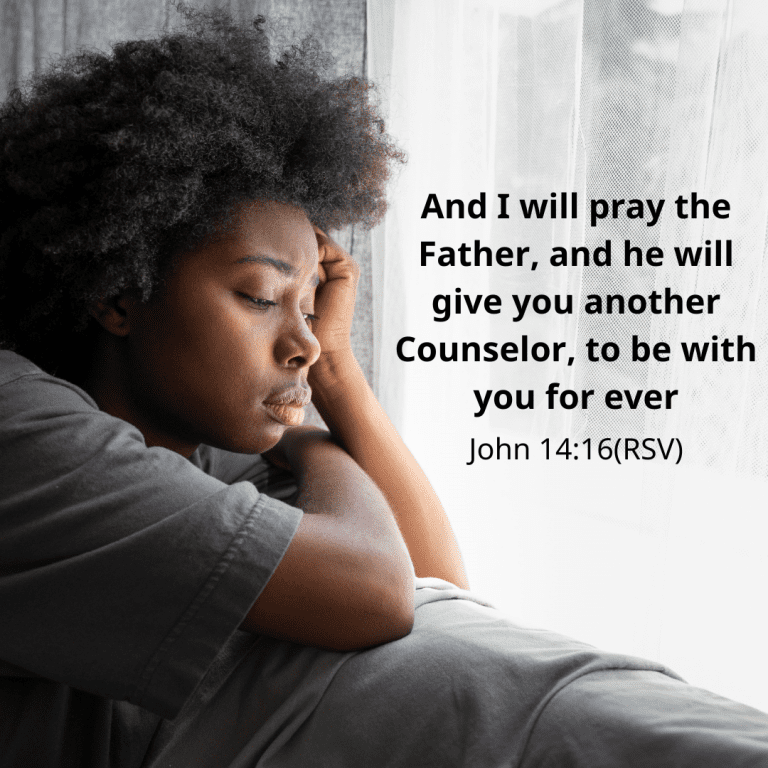
John 14:16-17 (RSV) – “And I will pray the Father, and he will give you another Counselor, to be with you for ever, even the Spirit of truth, whom the world cannot receive, because it neither sees him nor knows him; you know him, for he dwells with you, and will be in you.”
Jesus promised His disciples that the Holy Spirit would come as an Advocate—someone who stands by us, guiding and comforting. The Holy Spirit is not just a distant force but a constant presence who supports and defends believers.
2. The Spirit of Truth
John 16:13 (RSV) – “When the Spirit of truth comes, he will guide you into all the truth; for he will not speak on his own authority, but whatever he hears he will speak, and he will declare to you the things that are to come.”
The Holy Spirit is referred to as the Spirit of Truth because He leads us into a deeper understanding of God’s Word and His will. This guiding role helps believers discern right from wrong and stay aligned with God’s purposes.
3. The Giver of Power
Acts 1:8 (RSV) – “But you shall receive power when the Holy Spirit has come upon you; and you shall be my witnesses in Jerusalem and in all Judea and Samaria and to the end of the earth.”
One of the most significant roles of the Holy Spirit is empowering believers to be witnesses for Christ. Through His power, we are not only transformed internally but also equipped to spread the message of the Gospel with boldness.
4. The Divine Teacher
John 14:26 (RSV) – “But the Counselor, the Holy Spirit, whom the Father will send in my name, he will teach you all things, and bring to your remembrance all that I have said to you.”
The Holy Spirit is our Teacher, helping us understand and remember the teachings of Jesus. This guidance is essential as we grow in faith and navigate life’s challenges.
5. The Spirit Who Gives Life
Romans 8:11 (RSV) – “If the Spirit of him who raised Jesus from the dead dwells in you, he who raised Christ Jesus from the dead will give life to your mortal bodies also through his Spirit which dwells in you.”
The same power that raised Christ from the dead lives in believers, breathing life into our mortal bodies. This resurrection power not only brings physical renewal but also spiritual vitality.
6. The Seal of Belonging
Ephesians 1:13 (RSV) – “In him you also, who have heard the word of truth, the gospel of your salvation, and have believed in him, were sealed with the promised Holy Spirit.”
The Holy Spirit marks us as belonging to God. This seal is a guarantee of our inheritance in Christ and serves as a constant reminder that we are His.
7. The Spirit Who Unites
1 Corinthians 12:13 (RSV) – “For by one Spirit we were all baptized into one body—Jews or Greeks, slaves or free—and all were made to drink of one Spirit.”
The Holy Spirit unites believers into one body, transcending racial, social, and cultural differences. Through the Spirit, we become one in Christ, fostering unity within the church.
Embracing the Holy Spirit
Understanding who the Holy Spirit is transforms how we live out our faith. He is not just a divine presence but a Comforter, Advocate, Teacher, and Source of power and unity. As we walk with Him daily, we experience His guidance and embrace the life He offers.
May we continually seek a deeper relationship with the Holy Spirit, allowing His influence to shape every aspect of our lives.
As we step into a brand-new year, it’s easy to get caught up in the “New Year, New Me” vibe. Social media is buzzing with resolutions, glow-ups, and vision boards. But let’s pause for a second, what if a fresh start isn’t just about what we do but about what God is doing in us?
1. A Promise of Renewal
The Bible is full of stories where God hits the reset button. Think about Noah. After the flood, God gave humanity a second chance. The rainbow became a symbol of His promise to never give up on us. Genesis 9:13 says, “I have set my rainbow in the clouds, and it will be the sign of the covenant between me and the earth.” This covenant reminds us that no matter how overwhelming life gets, God is always faithful to renew His relationship with us. He’s not just a God of second chances but of endless chances, each wrapped in His love and grace.
2. Grace for the Israelites
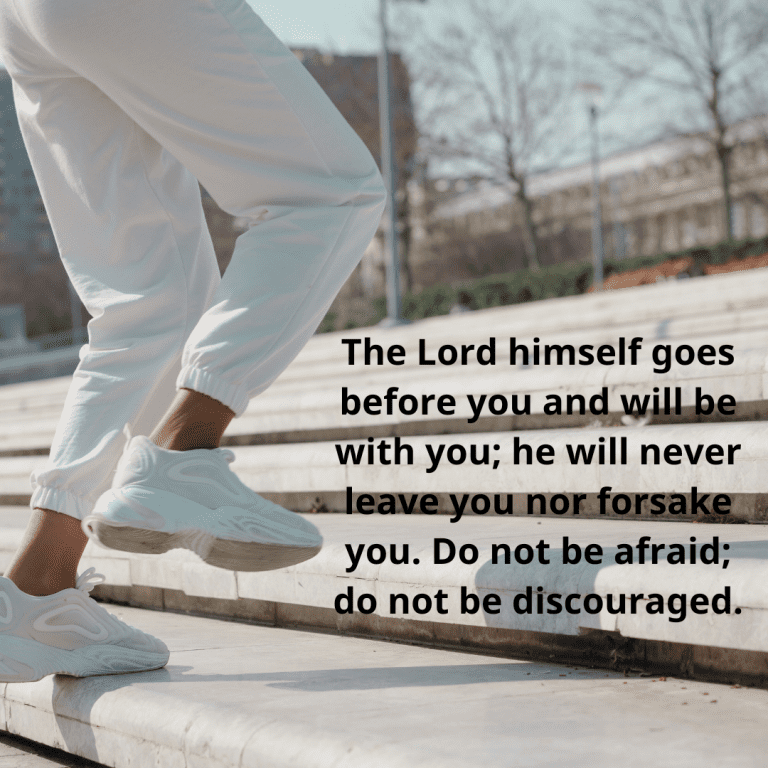
The Israelites messed up countless times, yet God’s grace led them into the Promised Land. His faithfulness shows us that no mistake is too big for a fresh start. Deuteronomy 31:8 reminds us, “The Lord himself goes before you and will be with you; he will never leave you nor forsake you. Do not be afraid; do not be discouraged.” Even in seasons of wandering and waiting, God was their guide and protector. This narrative is a powerful reminder that God’s presence remains constant, even when we lose our way.
3. Becoming a New Creation
Through Jesus, we’re not just given a clean slate, we’re made new. 2 Corinthians 5:17 declares, “Therefore, if anyone is in Christ, the new creation has come: The old has gone, the new is here!” This verse is a reminder that God’s transformation starts within. Being a new creation doesn’t mean life gets easier; it means we’re empowered by the Holy Spirit to live differently. It’s about leaving behind the labels and lies that once defined us and stepping boldly into the identity God has given us.
4. Letting Go of the Past
Sometimes life feels messy, and it’s hard to move forward. But God’s Word encourages us to release what’s behind. Isaiah 43:18-19 says, “Forget the former things; do not dwell on the past. See, I am doing a new thing!” God’s plans for us are always forward-focused. Letting go doesn’t mean pretending the pain or mistakes never happened. It means trusting God to use even our brokenness for His glory and to lead us into something better.
5. Daily Renewal Through Mercy
God’s mercies aren’t just for the start of the year, they’re new every single morning. Lamentations 3:22-23 proclaims, “Because of the Lord’s great love we are not consumed, for his compassions never fail. They are new every morning; great is your faithfulness.” This means every day is a fresh start. No matter how badly yesterday went, today is a chance to start over with God’s compassion as our foundation. His love is unshakable, and His faithfulness is unending.
6. Bold Steps of Faith
A fresh start often requires bold moves, like stepping out in faith. Joshua 1:9 encourages us, “Have I not commanded you? Be strong and courageous. Do not be afraid; do not be discouraged, for the Lord your God will be with you wherever you go.” Trust that God’s got your back as you move forward. Taking bold steps can feel scary, but it’s often where we grow the most. It’s in these moments of uncertainty that we discover the depth of God’s strength and provision.
7. Trusting in His Plans
As we embrace a new year, we can find peace in knowing that God’s plans are always for our good. Jeremiah 29:11assures us, “For I know the plans I have for you,” declares the Lord, “plans to prosper you and not to harm you, plans to give you hope and a future.” This promise doesn’t mean life will be problem-free, but it does mean that God’s purposes are perfect. Even when things don’t make sense, we can trust that He is working all things together for our good.
How to Make It Practical
- Pray About It: Ask God to show you what areas of your life need a reset. Be honest with Him; He can handle it.
- Find Your Squad: Surround yourself with people who point you toward Jesus. Life hits different when you’ve got a community that lifts you up.
- Set God-Centered Goals: Instead of just focusing on fitness or finances, think about how you can grow spiritually this year. Maybe it’s reading your Bible daily or serving others.
A Fresh Start for Everyone
Whether you’re stepping into this year with excitement or dragging last year’s baggage behind you, remember this: God specializes in fresh starts. He’s not limited by our failures or fears. His love is bigger, His grace is stronger, and His plans are better than anything we could imagine.
So, as you kick off this year, don’t just strive for change, invite God into your journey. He’s ready to write a new chapter in your story. Are you?

Today, The Gambia celebrates 60 years of independence, a milestone that marks six decades of freedom, growth, and national identity. Independence is a time to reflect on the sacrifices made for liberty and to express gratitude for the journey of a nation. As we commemorate this day, it is fitting to explore the biblical significance of the number 60 and how it connects to the greatest freedom ever given, our redemption through Jesus Christ.
The Biblical Significance of 60
In the Bible, numbers often carry deep symbolic meaning. The number 60 is associated with completeness, divine blessing, and fulfillment. In Genesis 25:26, Isaac was 60 years old when he became the father of Esau and Jacob, signifying a long-awaited fulfillment of God’s promise. Likewise, in 1 Kings 6:2, Solomon’s temple, a place of worship and divine presence, was 60 cubits long, symbolizing the completion of a sacred structure.
For The Gambia, reaching 60 years as an independent nation is a moment of completeness in one phase and the beginning of another. It is a time to reflect on past struggles and embrace the future with hope and faith.
Freedom Through Sacrifice
Independence did not come without struggle. Just as a nation fights for its freedom, humanity was once in bondage to sin, unable to liberate itself. But Jesus Christ, through His ultimate sacrifice, won for us a greater independence—the freedom from sin and death.
The Bible reminds us:
“So if the Son sets you free, you will be free indeed.” (John 8:36)
Jesus’ sacrifice on the cross was the price paid for our redemption. He took upon Himself our burdens, breaking the chains of sin that enslaved us. This is a freedom that no earthly government can provide—an eternal liberation that reconciles us with God.
A Call to True Freedom
As The Gambia celebrates 60 years of independence, it is also a time for its people to seek the deeper freedom found in Christ. Earthly freedom is precious, but spiritual freedom is eternal. The Apostle Paul wrote:
“It is for freedom that Christ has set us free. Stand firm, then, and do not let yourselves be burdened again by a yoke of slavery.” (Galatians 5:1)
This is a reminder that while political independence is valuable, true freedom is found in surrendering to Christ. A nation may be free from colonial rule, but its people will only experience complete liberty when they live under the reign of Christ.
Conclusion: Walking in Freedom
The journey of The Gambia at 60 is a testimony to endurance, resilience, and hope. As we celebrate this significant milestone, let it also be a moment to reflect on the greatest freedom we have, the freedom in Christ. Nations rise and fall, but the kingdom of God remains forever. Let us, as individuals and as a nation, embrace this divine liberation and walk in the light of Christ.
May The Gambia continue to grow in peace and righteousness, and may its people always seek the freedom that only Jesus can give. Happy 60th Independence Day, The Gambia!
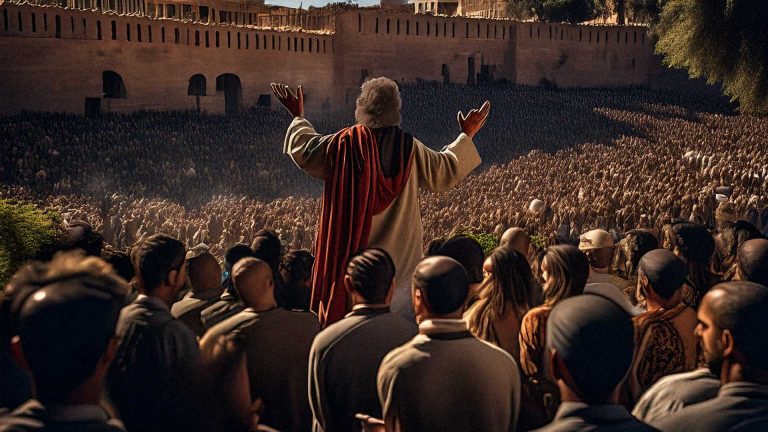
Acts 2:1-4, 38-41 When the day of Pentecost arrived, they were all together in one place. And suddenly there came from heaven a sound like a mighty rushing wind, and it filled the entire house where they were sitting. And divided tongues as of fire appeared to them and rested on each one of them. And they were all filled with the Holy Spirit and began to speak in other tongues as the Spirit gave them utterance. … And Peter said to them, “Repent and be baptized every one of you in the name of Jesus Christ for the forgiveness of your sins, and you will receive the gift of the Holy Spirit. For the promise is for you and for your children and for all who are far off, everyone whom the Lord our God calls to himself.” And with many other words he bore witness and continued to exhort them, saying, “Save yourselves from this crooked generation.” So those who received his word were baptized, and there were added that day about three thousand souls.
When we allow the Holy Spirit to work through us, we can impact others in ways we couldn’t imagine on our own. God opened the minds of Peter and the other apostles to understand the Scriptures. Led by the Holy Spirit, he preached and 3,000 people were baptised in one day.
Question: How can you allow the Holy Spirit to guide you in your daily life?
Marriage is the foundation for the Christian family. Husband and wife and by God’s grace blessed with children. Whether you hope to marry one day or are already married it’s good to go to the Bible and learn about marriage.
- Genesis 2:24 Therefore a man shall leave his father and his mother and hold fast to his wife, and they shall become one flesh.
Marriage is mentioned already in creation. Whether you are already married or not, here are Bible verses to guide you to what the Bible says about marriage.
- 1 Corinthians 7:2 But because of the temptation to sexual immorality, each man should have his own wife and each woman her own husband.
There are many kinds of temptations in the world. To be married is to give our love and loyalty to our husband or wife.
- Ephesians 5:25 Husbands, love your wives, as Christ loved the church and gave himself up for her
In a Christian marriage the husband is to love his wife as Christ loved us. This is to love even when it’s not deserved, unconditionally.
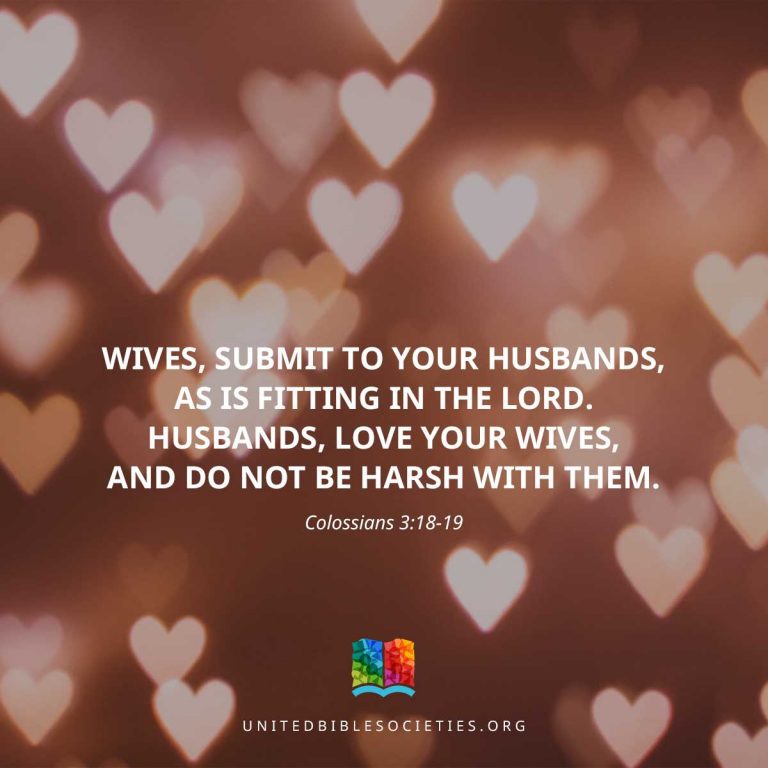
- Colossians 3:18-19 Wives, submit to your husbands, as is fitting in the Lord. Husbands, love your wives, and do not be harsh with them.
Love between husband and wife includes for the husband to be gentle and giving himself up for his wife, and for the wife to submit to and respect her husband.
- Exodus 20:14 You shall not commit adultery.
Loyalty and trust are fundamental in all relationships. In marriage that means to forsake all others and not have any other intimate relationships.
- Matthew 5:27-28 You have heard that it was said, ‘You shall not commit adultery.’ But I say to you that everyone who looks at a woman with lustful intent has already committed adultery with her in his heart.
Jesus taught us that it’s not only the act of adultery that is breaking the commandment, but even lustful thoughts.
- Ephesians 4:32 Be kind to one another, tenderhearted, forgiving one another, as God in Christ forgave you.
Although this verse speaks of the love between all Christians, it also applies to husband and wife. Forgive each other and be kind.

Perhaps you’ve selected a Bible and started reading it. Maybe you’re even setting aside regular times to reflect or pray. You’ve gotten a taste of what’s inside, and a desire for God’s words is growing in you as you recognize the nourishment God offers in these encounters. What comes next? How do you go from a surface reading to unlocking and taking in more and more of what God has for you?
Whether you are reading the Bible for devotion, prayer, or academic learning, it is helpful to know how to study a Scripture passage. Studying helps us understand Scripture in its context, setting the stage for us to hear how God continues to speak to us through it today.
Find a comfy chair, pour a cup of coffee, and join me in studying the parable of the lost coin in Luke 15:8-10. Download this worksheet to try these ten steps on a passage of your choosing—alongside my example or anytime after.
1. Pray
Begin your time with prayer. Take a moment to clear your mind and focus your attention. Ask God to be with you as you study and reflect on this passage:
“Dear God, meet me as I read your Word. Give me eyes to see, ears to hear, and a heart to understand. Amen.”
2. Read the passage
Get familiar with your passage by reading it several times. Try reading it in different translations: at least one that is more word-for-word (like NRSV, NKJV, or NASB) as well as a translation that is more thought-for-thought (like GNT, NLT, or the Message). Notice how different translations help you understand the passage in different ways. What words and images stand out to you?
NRSV: “Or what woman having ten silver coins, if she loses one of them, does not light a lamp, sweep the house, and search carefully until she finds it? When she has found it, she calls together her friends and neighbors, saying, ‘Rejoice with me, for I have found the coin that I had lost.’ Just so, I tell you, there is joy in the presence of the angels of God over one sinner who repents.”
The Message: “Or imagine a woman who has ten coins and loses one. Won’t she light a lamp and scour the house, looking in every nook and cranny until she finds it? And when she finds it you can be sure she’ll call her friends and neighbors: ‘Celebrate with me! I found my lost coin!’ Count on it—that’s the kind of party God’s angels throw every time one lost soul turns to God.”
3. Who is speaking? To whom are they speaking?
Sometimes the speaker and audience are disclosed in the passage; other times you have to go back several verses or chapters. In this passage, the previous verses tell us that the tax collectors and sinners were coming near to listen to Jesus. This made the Pharisees and scribes—the religious professionals—grumble. So Jesus addresses this teaching to them (Luke 15:1-3). Knowing Jesus is speaking these words makes us hear them as spoken with his authority. Take into account who is speaking, who they are speaking to, and what they are speaking about to discern the meaning and relative weight of your passage.
4. Who are the key characters?
Name the characters and find out who they are. Do they appear anywhere else in Scripture? Do they have a backstory? Do they have a title or role? In and around this passage, we have Pharisees and scribes, who are the religious elite in Jesus’s time. We have tax collectors and sinners, who are the outcasts. And we have the unnamed woman of the parable, respectable but with little status in Jewish culture because of her gender.
5. What is the genre of literature?
This teaching is identified as a parable (Luke 15:3), and it follows familiar markers of this type of writing. Parables tell stories using common images—like sheep and agriculture and families—to communicate deeper truths. They are fictional teaching illustrations, usually with some unexpected twist. Jesus often uses parables in teaching his disciples and other followers.
Other biblical genres you will encounter include narrative, law, prophecy, letters, wisdom, and apocalyptic literature. Identifying the genre helps us know how to read the passage—is this meant to be literal or figurative? Is it teaching or telling me something? Knowledge of the genre can help point us toward the intended meanings, similar to how we would read a novel or a history book with different expectations.
6. What does the original language say?
This step may sound daunting, but online tools now make the Greek and Hebrew behind our English translations more accessible to any reader. My favorite is Blue Letter Bible. Type in your Bible reference, then click on a specific verse to see it expanded in the original language. From that view, you can select a word and connect to its entry in their edition of Strong’s Concordance. You can see where else in the Bible this word has been used and the ways other translators have translated it, giving you a more nuanced understanding of its meaning.
7. What comes before and after the passage?
As we saw, zooming out a little helps us read the passage in context. What is happening before and after your verses? Is your passage a continuation of what came before? Is it setting up something that comes later?
Often parables come in a series, each expounding on the same teaching, or interpreting the other. In this passage, the parables before and after further illustrate the same concept. Each tells about something (or someone) that was lost being found—a lost sheep, a lost coin, a lost son. Each gives a metaphor for God personally seeking out the lost—the shepherd, the woman, the father. The recovery leads to great rejoicing, pointing to God’s joy “over one sinner who repents” (Luke 15:10).
8. What are characteristics of the whole book?
Zoom out even further. What can you find out about the whole book? You may want to consult a commentary, online Bible resource, or notes included with your Bible or study Bible. What is the historical or cultural context? What are the book’s themes? Do you know who wrote or compiled it? Remember, much of the New Testament was written in the Ancient Near East during the first century, and the Old Testament is even older, so its assumptions are very different from ours in the global twenty-first century!
Often some of this information can be found in the first chapter. The author may identify who they are speaking as, address their audience, or state their purpose. For our passage, we can identify Luke as one of the four Gospels, or accounts of the life of Jesus. Luke set out to write an “orderly account” about Jesus’s life, ministry, death, and resurrection (Luke 1:1-4).
Luke’s Gospel is set within the Roman Empire, which had harsh class distinctions and power structures. There were clear “in groups” and “out groups.” The poor, women, and certain ethnic groups were at the bottom of society, often shunned and mistreated. But throughout Luke, Jesus’s call includes the outsiders. And Jesus calls his disciples to do the same.
9. What is the passage’s message to its intended audience?
There are always layers to the audience when reading Scripture. Consider who is listening to the message, who the book was written to, who this writing spoke to on a wider scale, and who is receiving its words today. In this passage we have the hearers of Jesus, the church community of Luke, the wider New Testament church, and us too.
Piecing all our research together, we now get to make some initial conclusions. The Pharisees and scribes, who are powerful and elite, are grumbling because Jesus is including sinners and outcasts in his ministry. This is an ongoing tension throughout Luke’s Gospel. In response, Jesus uses a series of parables to reiterate that including outsiders is the focus of his ministry—and one of God’s primary concerns. Jesus came to seek out the lost, and God rejoices greatly when they are found. He uses an image of a woman—someone who did not have status in his culture—to represent God diligently seeking out those who are lost and celebrating at their return.
10. Reflect on the passage’s significance for you
The last step is to take all your gleanings and contemplate what this passage may be saying to you. Each person will find that different aspects or truths stand out. God may be showing you something specific about your own journey and spiritual growth. Take time to reflect and listen.
What is God saying to you as you reflect on the parable of the lost coin? Consider these questions: Who are the lost or outcasts in your culture, community, family? If God seeks out the lost, are you called to do the same? How might you do this? Conversely, what are lost parts of yourself, in need of Jesus? In what ways might God be seeking you now? How would it feel to be found?
As you go forward, live with the passage. Let the words and observations take root inside you. See if they come to mind in certain situations, giving you wisdom or insight or calling you to take an action. Let the passage’s meanings mature in you over time.

Come feel Africa’s rhythm! Its heart tells stories of winning, strength, and togetherness. As the sun shines on its big lands and lively cultures, we’re on the edge of Africa Day. It’s a party that goes beyond borders, celebrating what it means to be African.
A – Abundance of Blessings
Africa is blessed with natural wonders and resources, reflecting God’s abundant provision. Psalm 68:19 reminds us, “Praise be to the Lord, to God our Savior, who daily bears our burdens.”
F – Faithful Foundations
Africa’s history is intertwined with faith, from the ancient civilizations to modern-day believers. Hebrews 11:1 inspires us, “Now faith is confidence in what we hope for and assurance about what we do not see.”
R – Richness of Diversity
Africa’s diverse peoples and cultures showcase the beauty of God’s creation. Galatians 3:28 proclaims, “There is neither Jew nor Gentile, neither slave nor free, nor is there male and female, for you are all one in Christ Jesus.”
I – Inheritance of Identity
Africa’s heritage is a testament to the enduring legacy of its people. Psalm 16:6 assures us, “The boundary lines have fallen for me in pleasant places; surely I have a delightful inheritance.”
C – Call to Community
Africa’s communal spirit fosters unity and solidarity among its inhabitants. Ecclesiastes 4:9-10 teaches us, “Two are better than one, because they have a good return for their labor: If either of them falls down, one can help the other up. But pity anyone who falls and has no one to help them up.”
A – Affirmation
The Bible affirms the inherent value and dignity of every individual, echoing the principle of ubuntu prevalent in many African cultures.”So God created mankind in his own image, in the image of God he created them; male and female he created them.” – Genesis 1:27
As we journey through the spiritual essence of AFRICA, let us embrace its blessings, celebrate its diversity, and honor its heritage. For in this vast and vibrant continent, we discover echoes of God’s faithfulness, reminders of our shared humanity, and glimpses of His divine purpose for all creation. Let us unite in prayer, as Psalm 133:1 proclaims, “How good and pleasant it is when God’s people live together in unity!”
The Gambia at 60: A Reflection on Freedom in Christ
Today, The Gambia celebrates 60 years of independence, a milestone that marks six decades of freedom, growth, and national identity. Independence is a time to reflect on the sacrifices made for liberty and to express gratitude for the journey of a nation. As we commemorate this day, it is fitting to explore the biblical significance of the number 60 and how it connects to the greatest freedom ever given, our redemption through Jesus Christ.
Peter: Filled with the Holy Spirit at Pentecost
When we allow the Holy Spirit to work through us, we can impact others in ways we couldn’t imagine on our own. God opened the minds of Peter and the other apostles to understand the Scriptures. Led by the Holy Spirit, he preached and 3,000 people were baptised in one day.
7 Bible Verses about Marriage
Loyalty and trust are fundamental in all relationships. In marriage that means to forsake all others and not have any other intimate relationships.
HOW TO STUDY THE BIBLE
The Message: “Or imagine a woman who has ten coins and loses one. Won’t she light a lamp and scour the house, looking in every nook and cranny until she finds it? And when she finds it you can be sure she’ll call her friends and neighbors: ‘Celebrate with me! I found my lost coin!’ Count on it—that’s the kind of party God’s angels throw every time one lost soul turns to God.”

Lenten Reflection Day 1
Genesis 1:1 by Reverend Father Anthony Gabisi, Parish Priest Of Saint Therese’s Parish, Kanifing.
Today, The Gambia celebrates 60 years of independence, a milestone that marks six decades of freedom, growth, and national identity. Independence is a time to reflect on the sacrifices made for liberty and to express gratitude for the journey of a nation. As we commemorate this day, it is fitting to explore the biblical significance of the number 60 and how it connects to the greatest freedom ever given, our redemption through Jesus Christ.
When we allow the Holy Spirit to work through us, we can impact others in ways we couldn’t imagine on our own. God opened the minds of Peter and the other apostles to understand the Scriptures. Led by the Holy Spirit, he preached and 3,000 people were baptised in one day.
Loyalty and trust are fundamental in all relationships. In marriage that means to forsake all others and not have any other intimate relationships.
The Message: “Or imagine a woman who has ten coins and loses one. Won’t she light a lamp and scour the house, looking in every nook and cranny until she finds it? And when she finds it you can be sure she’ll call her friends and neighbors: ‘Celebrate with me! I found my lost coin!’ Count on it—that’s the kind of party God’s angels throw every time one lost soul turns to God.”
Genesis 1:1 by Reverend Father Anthony Gabisi, Parish Priest Of Saint Therese’s Parish, Kanifing.
Unlocking the Spiritual Essence of AFRICA:
As we journey through the spiritual essence of AFRICA, let us embrace its blessings, celebrate its diversity, and honor its heritage. For in this vast and vibrant continent, we discover echoes of God's faithfulness, reminders of our shared humanity, and glimpses of His divine purpose for all creation.
As we journey through the spiritual essence of AFRICA, let us embrace its blessings, celebrate its diversity, and honor its heritage. For in this vast and vibrant continent, we discover echoes of God's faithfulness, reminders of our shared humanity, and glimpses of His divine purpose for all creation.